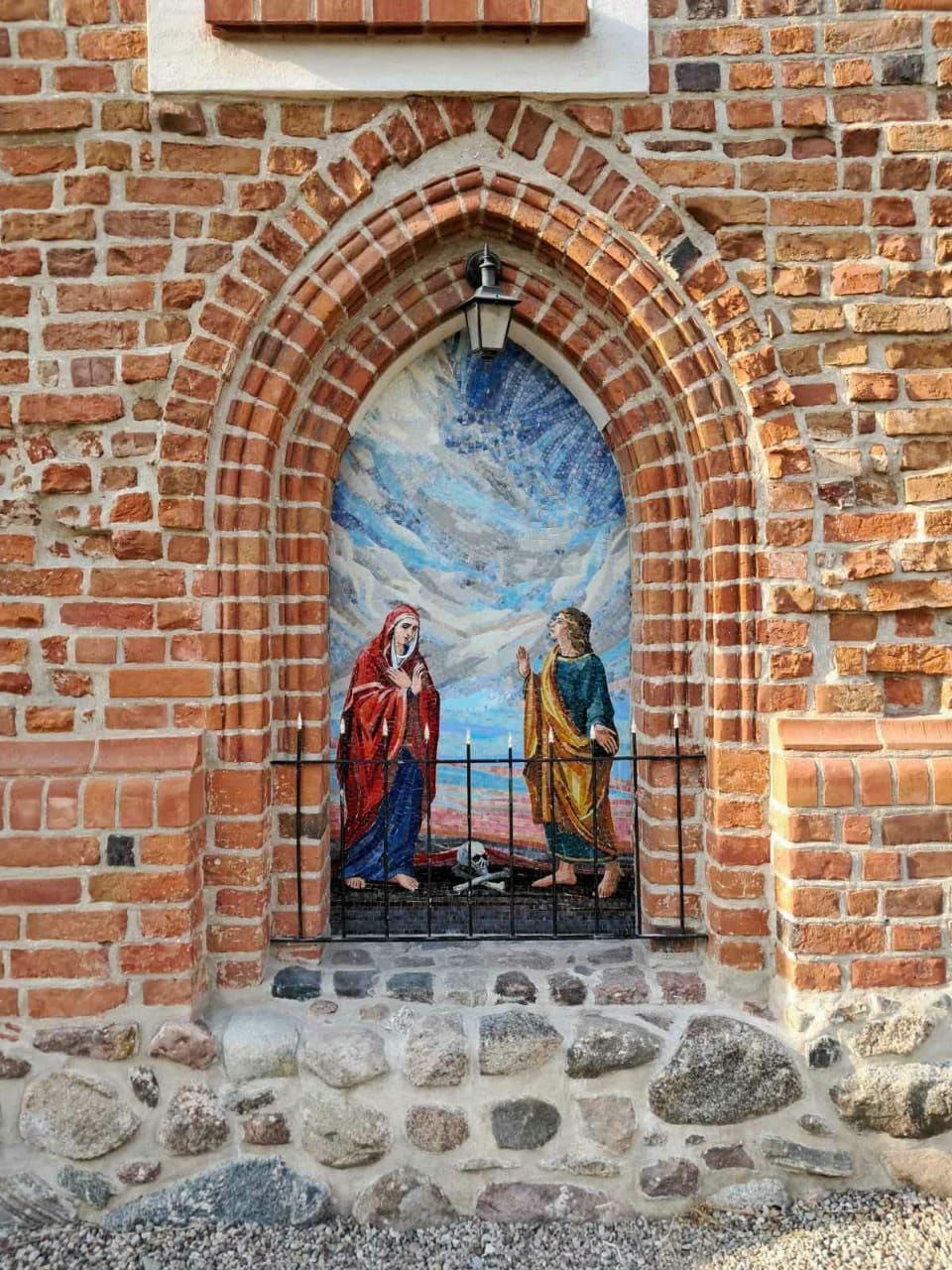
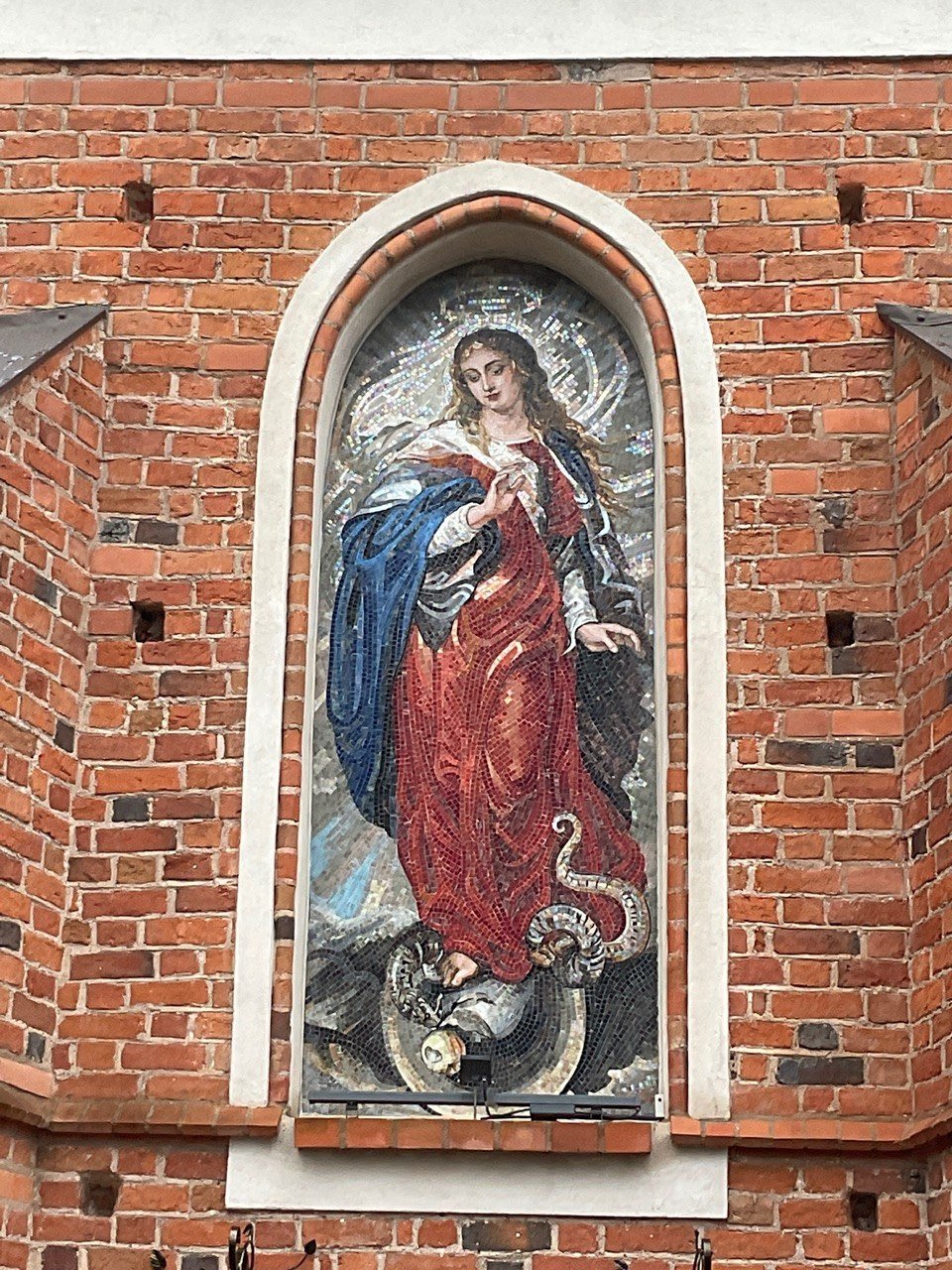
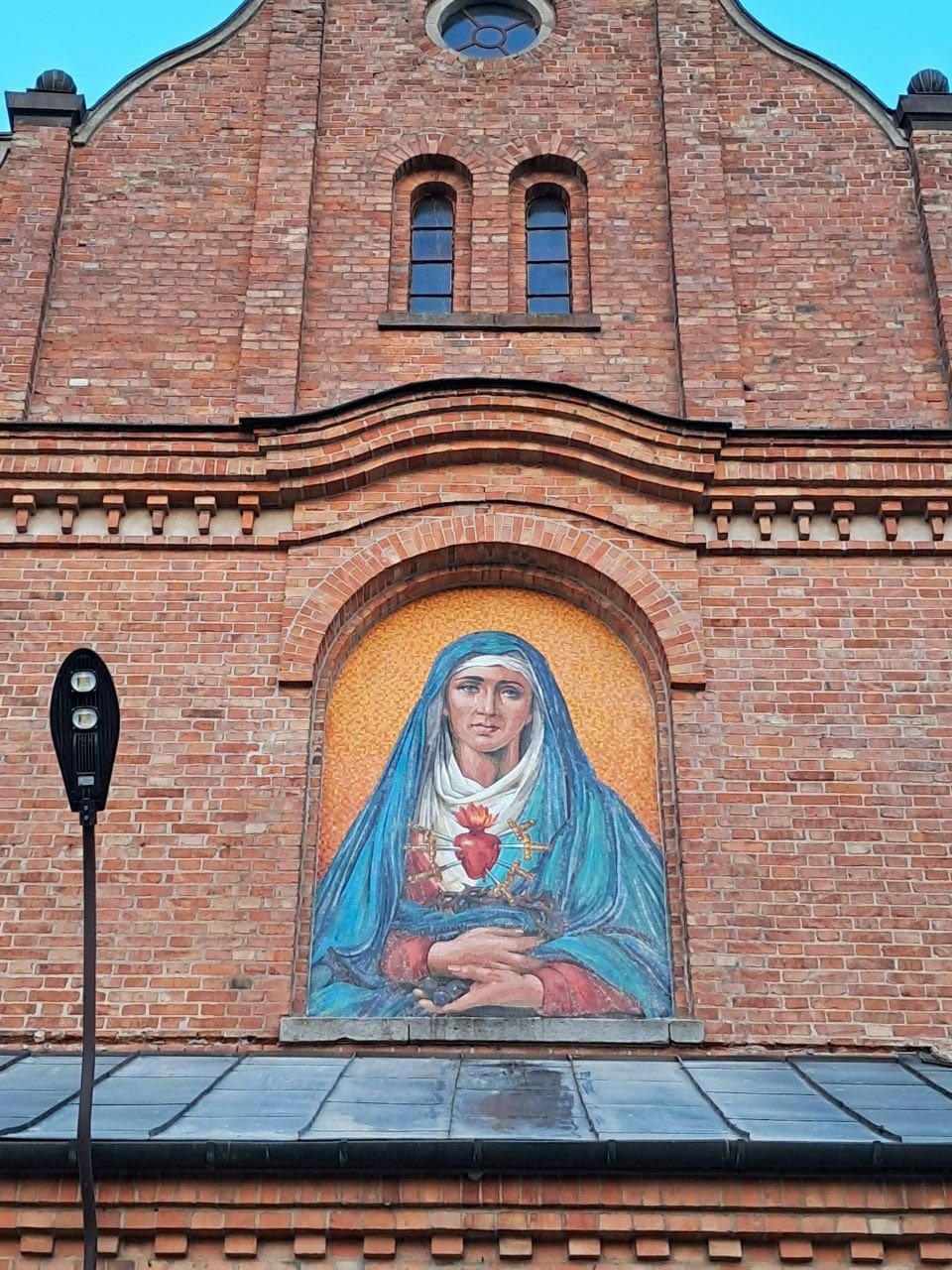
A facade works around the clock
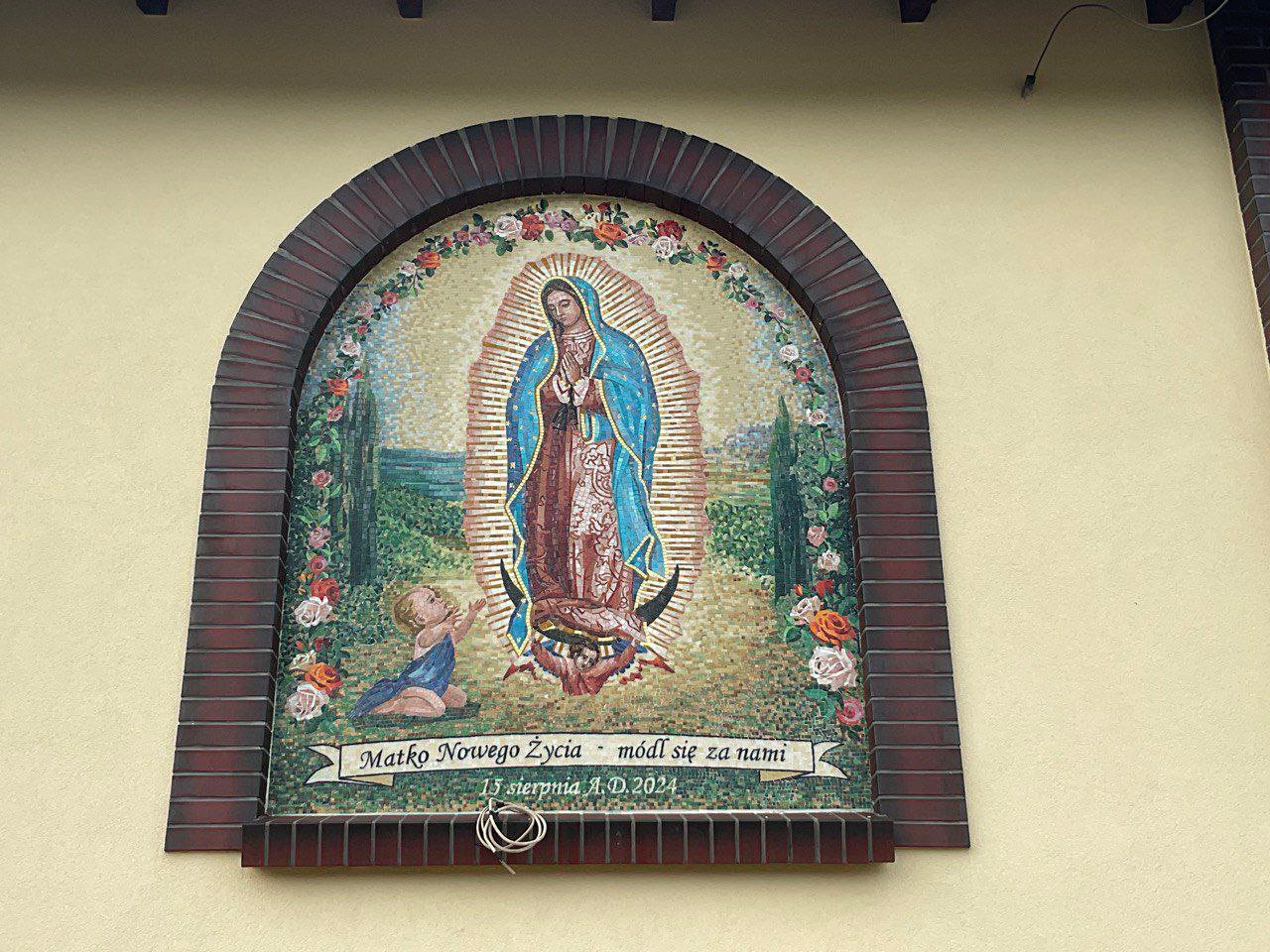
A mosaic inside works during services. A mosaic on the facade works without a break: everyone passing the church on the way to school, the shop or work sees it, including those who never go in. For a parish it is the most visible investment there is – and the only one that says something about the church before anyone opens the door.
Why mosaic rather than paint
A painted image outdoors needs redoing every few years: sun bleaches the paint, frost lifts it together with the render, water gets into the cracks. Mosaic in glass, smalti and stone does not have this problem – the colour is in the material, not on its surface. An exterior mosaic therefore lasts decades without conservation, and the cost is counted once rather than every few years.
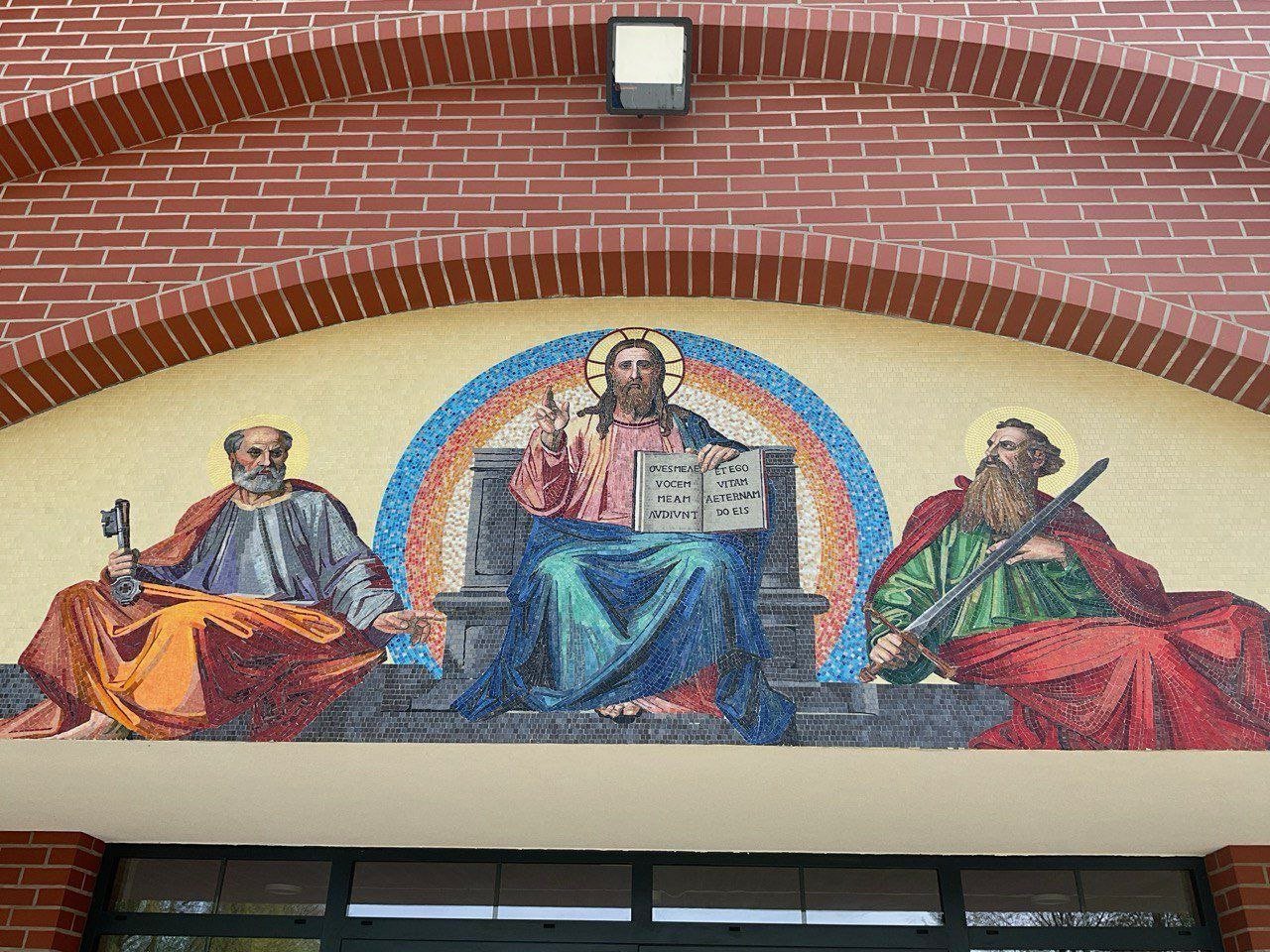
Where a mosaic goes on a church
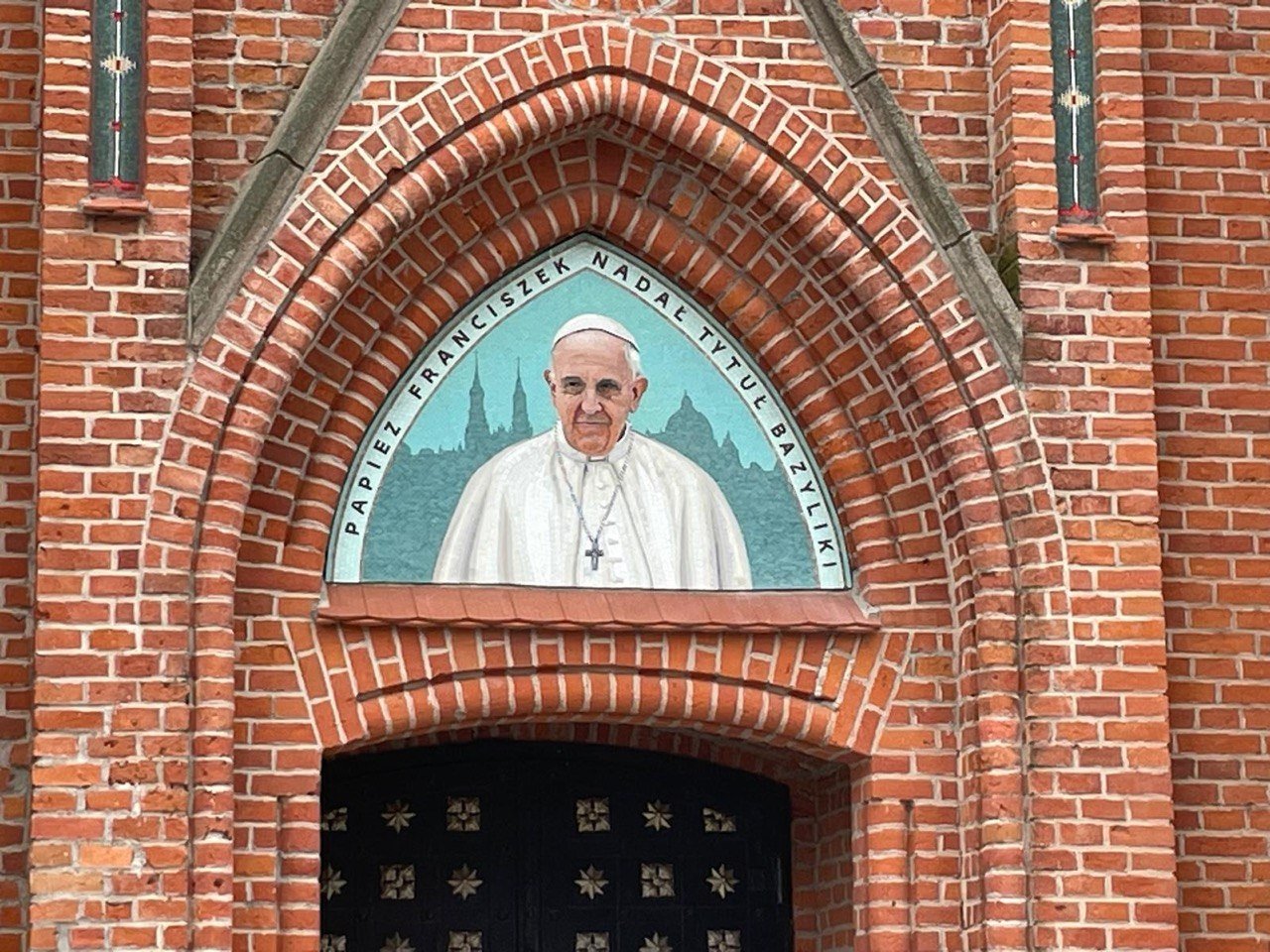
Most often in the tympanum over the main door – the strongest position, visible from the whole square. Then: niches in the elevation, the gable, the wall by a side entrance, the outside of the sanctuary facing the street, and free-standing shrines beside the church. We match the size and composition to the distance from which it will be seen; legibility from across a square is a different calculation than from two metres.
Inscriptions, dates and dedications
The dedication of the church, a quotation, a jubilee date, the names of donors – all of it is laid in the mosaic together with the image, not applied separately. Letters are usually set in gold tesserae, which keeps them readable against the light and at dusk. Such an inscription is permanent: it will not come away after a winter or fade like painted or bolted-on lettering.
Listed churches and price
We set the mosaic into an existing niche or onto a prepared backing, without disturbing the structure of the wall – including in brick Gothic churches. Work on a listed building has to be agreed with the heritage authority; we prepare the documentation and the cost estimate needed for the application. A mosaic costs from 4,000 to 15,000 PLN per m². The price depends on the complexity, the number of faces and figures and the materials used. The estimate is free.
Frequently asked questions
How much does a facade mosaic cost?
A mosaic costs from 4,000 to 15,000 PLN per m². The price depends on the area, the complexity, the number of faces and figures, and the materials. We prepare an estimate free of charge once we have a photograph of the elevation and the dimensions of the site.
Will the mosaic survive a hard winter?
Yes. We use frost-proof and waterproof materials and mortars intended for exterior use. The mosaic does not absorb water, so frost cannot break it, and the colours do not bleach in the sun.
Can a mosaic go on a listed church?
Yes, but it has to be agreed with the heritage authority. We prepare the design, documentation and estimate needed for the application and help check whether a conservation grant is available.
Can an inscription be laid in the mosaic?
Yes. A dedication, a quotation, a date or the names of donors are laid together with the image, usually in gold tesserae. The inscription is part of the mosaic, not an applied element.
How is a mosaic fixed to an elevation?
We prepare the mosaic in the workshop in sections and mount it on a rigid backing. We do not cut into the masonry, so installation is quick and leaves the structure of the wall untouched.
Does the wall need preparing?
The substrate must be flat, dry and sound. We assess any preparatory work on site or from photographs and state it with the estimate, so there are no surprises.