A small space follows different rules
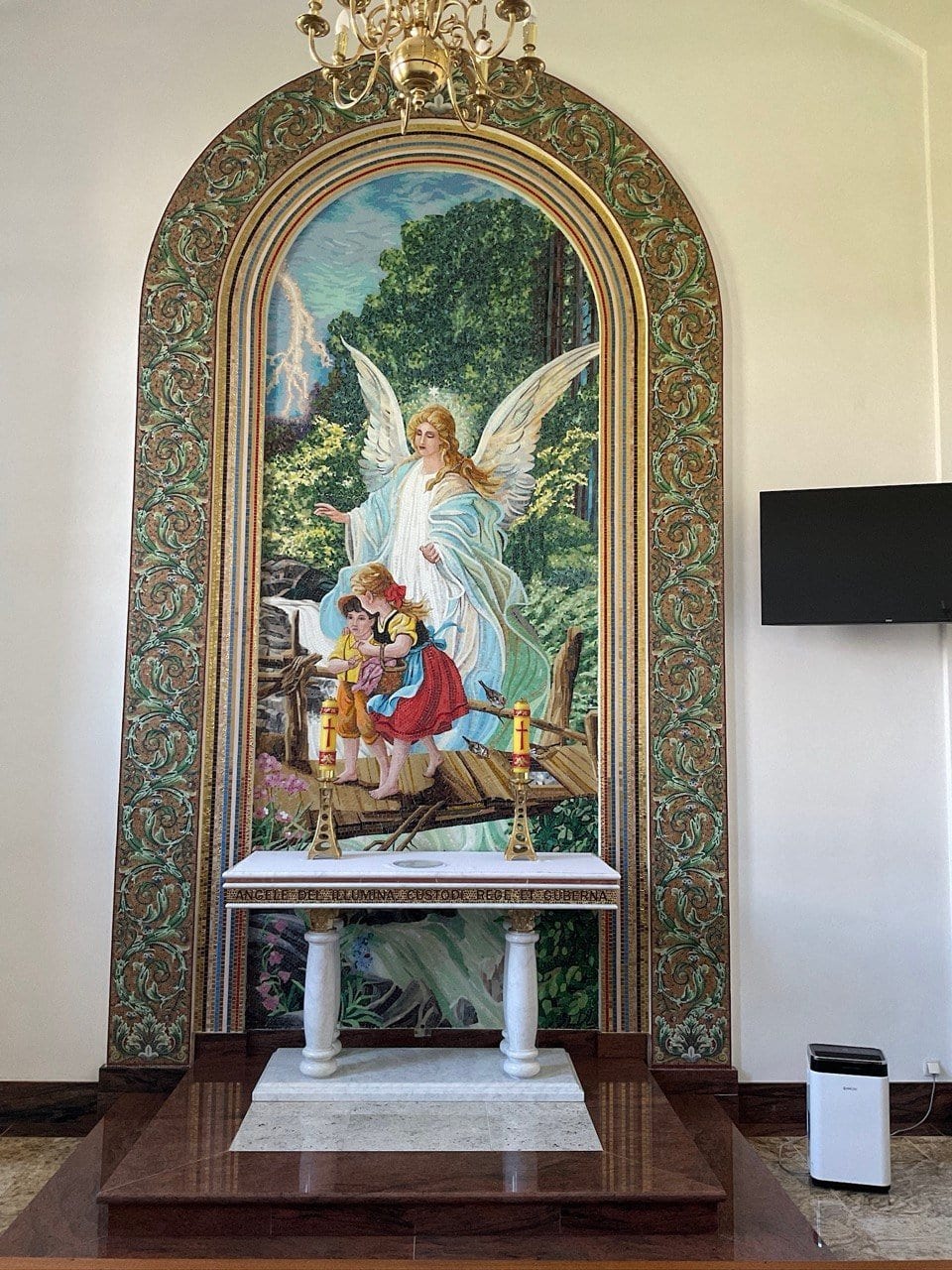
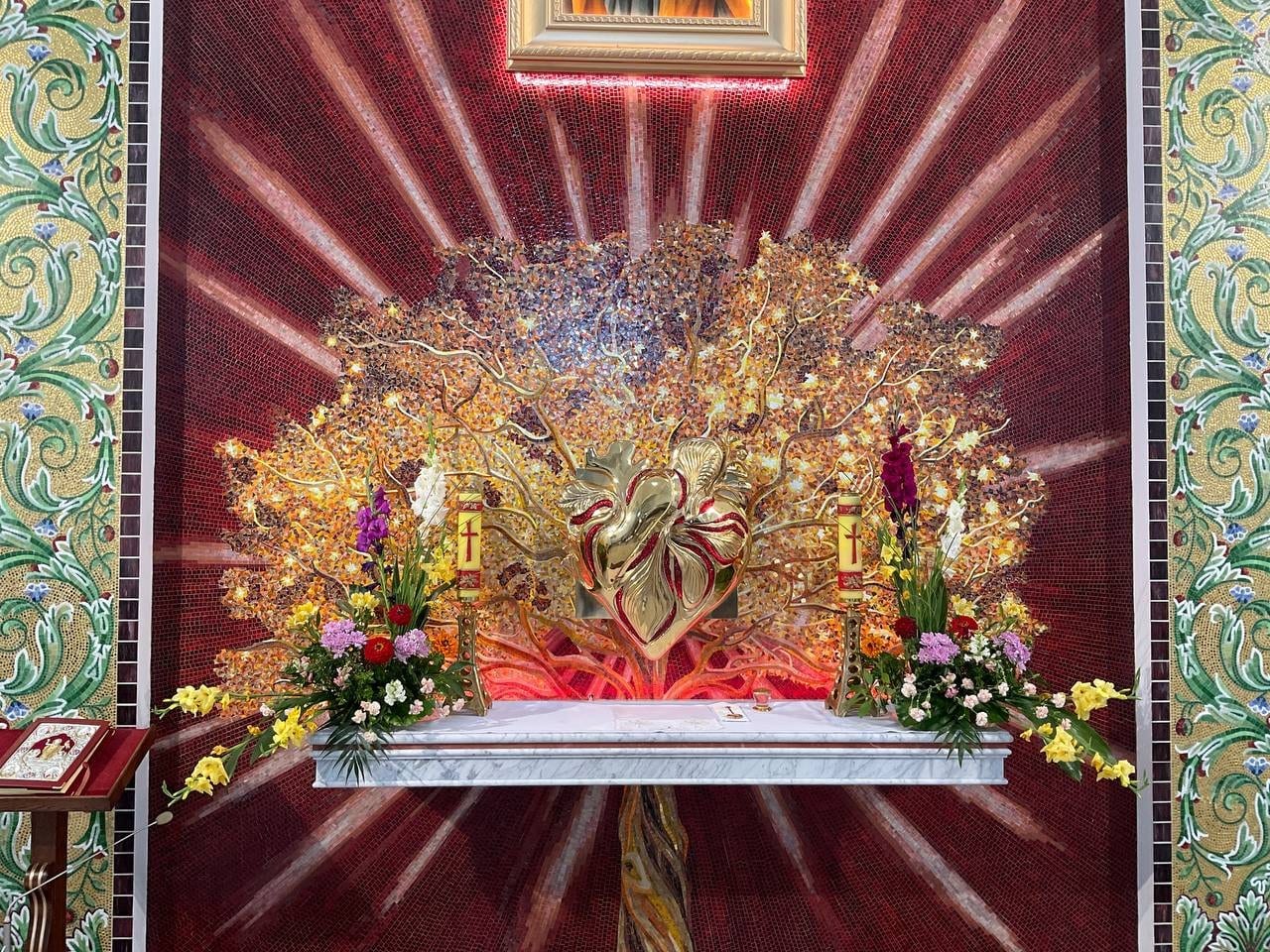
In a church a mosaic competes with distance; in a chapel it competes with proximity. From two metres every tessera is visible, so the drawing has to be calmer and the texture more varied. In chapels we therefore use smaller tesserae, fewer harsh contrasts and more materials with different surfaces: matte glass next to iridescent, marble next to smalti. The surface then comes alive with every movement of the head.
The altar wall as a whole
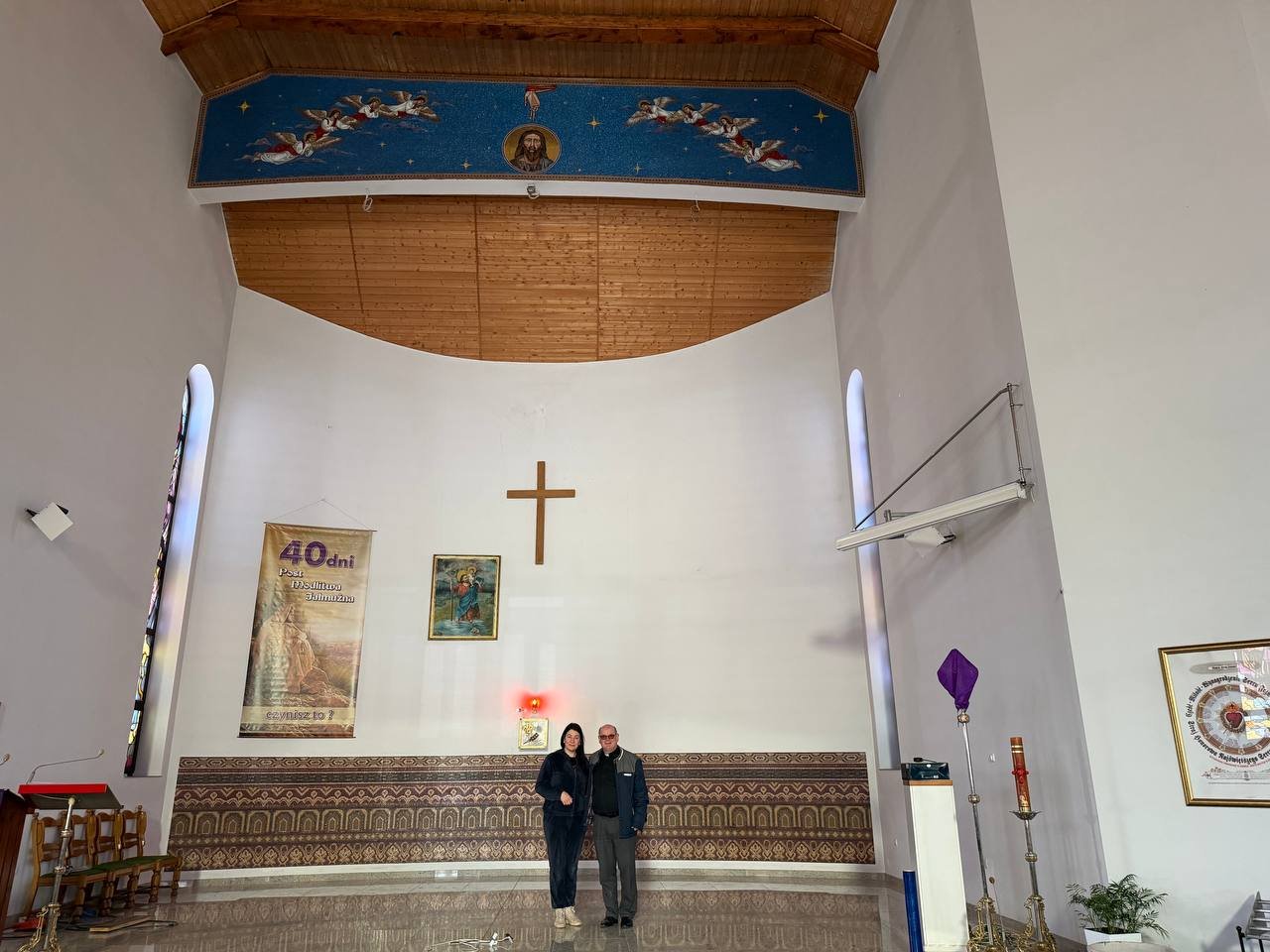
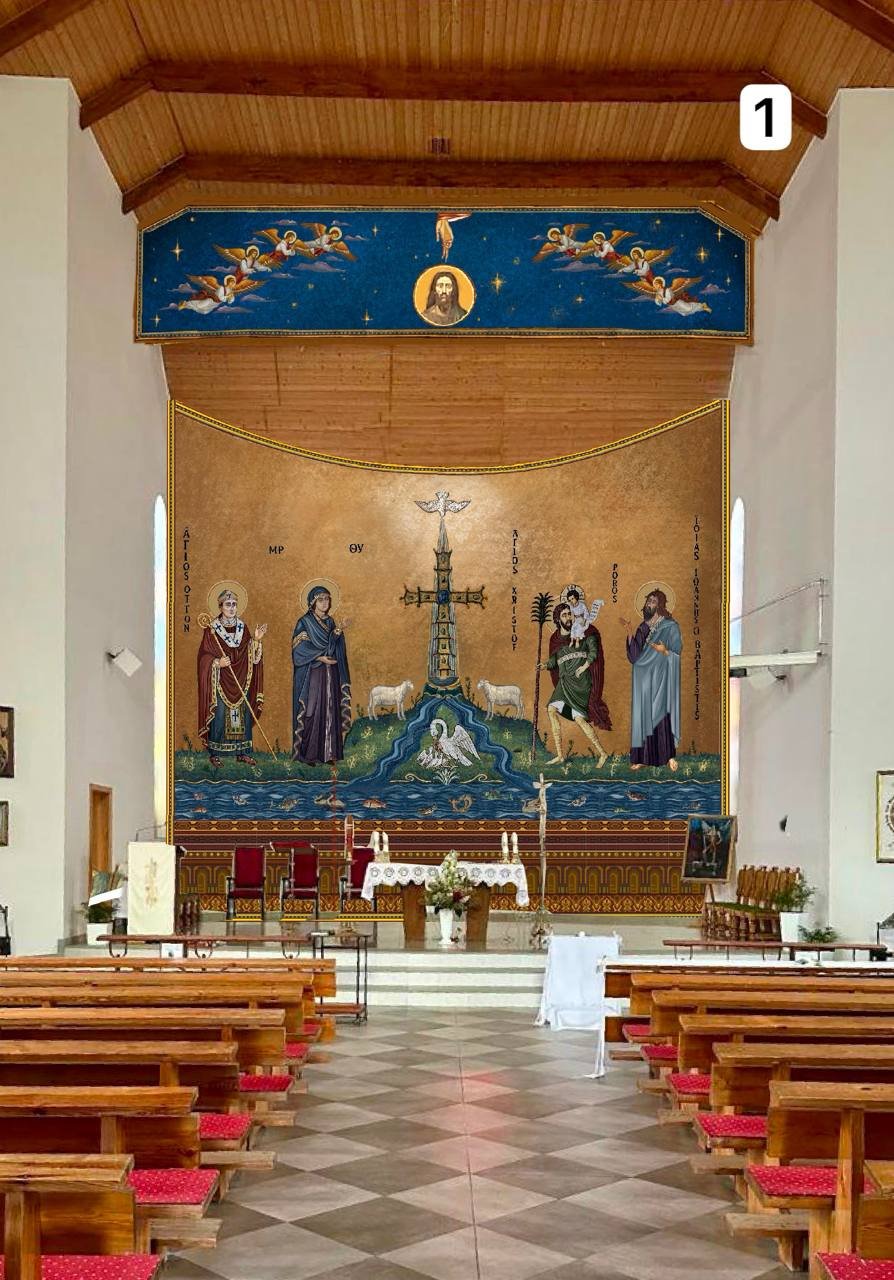
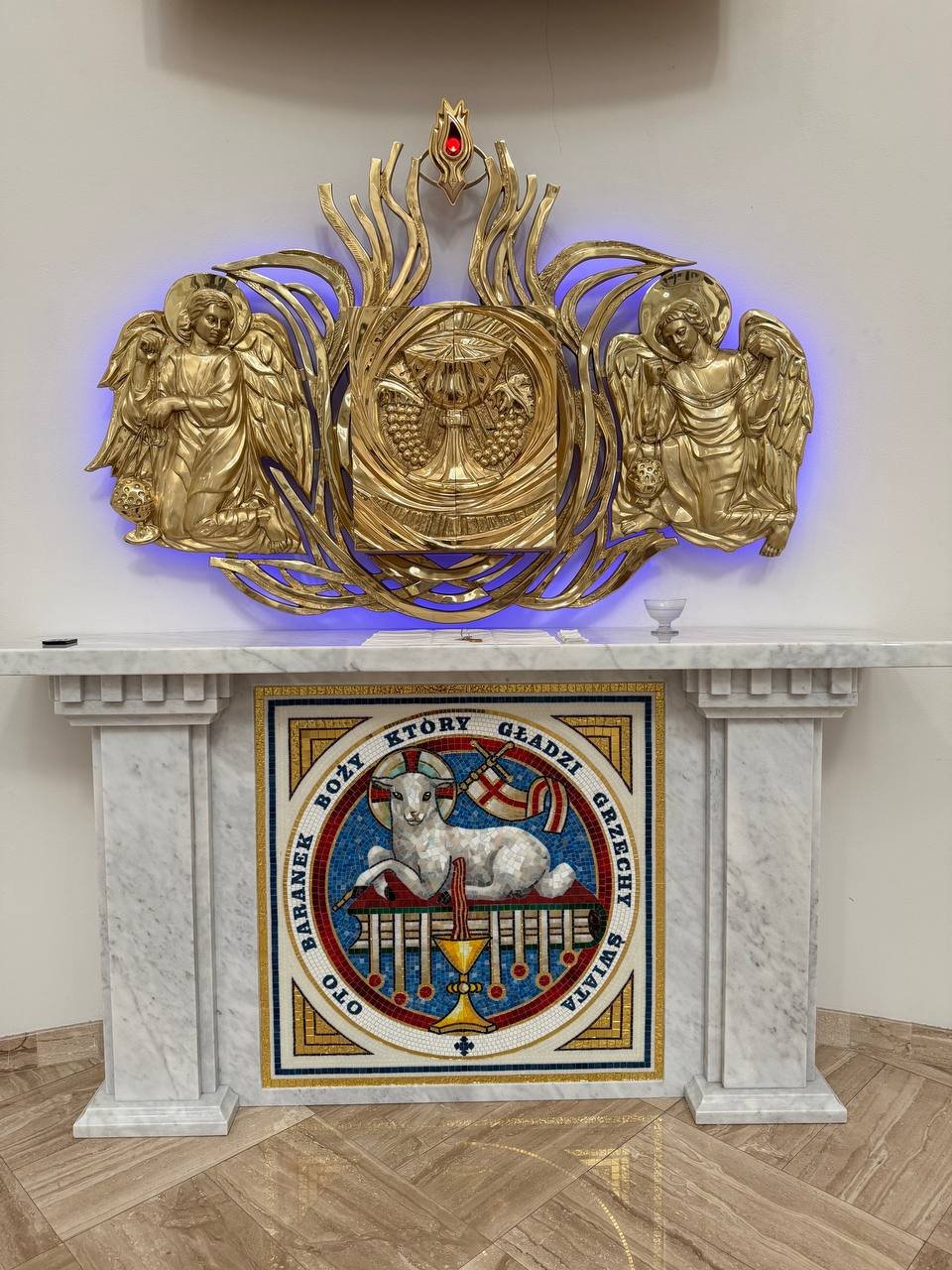
The most common commission is the wall behind the altar. Instead of hanging a picture on an empty wall we build a composition across its full width: a central image, a ground of gold smalti or blue, an ornamental frame and a band below the mensa. Work like this puts the whole interior in order – the chapel stops looking like a converted room and starts looking like a designed place.
There is little light – and that must be used
Chapels are often dark: one window, frequently a side one, and artificial light in the evening. Gold smalti and iridescent glass work better than paint in those conditions because they reflect whatever light there is. When designing we ask which side the daylight comes from and where the light fittings are – that determines the angle at which we set the gold.
Cemetery, hospital and monastic chapels
A cemetery chapel needs materials resistant to damp and to temperature swings, because such rooms are rarely heated. A hospital chapel calls for calm, legible compositions without excess detail – people come there at difficult moments. Monastic and seminary chapels usually take the devotion of the community and its symbols. A wayside shrine needs frost- and UV-resistant material and mounting that does not disturb the masonry.
Price and funding
A mosaic costs from 4,000 to 15,000 PLN per m². The advantage of a chapel is that the area is small, so the whole interior is often within reach of a single family of donors or one parish group – we can place a plaque with the intention next to the mosaic. The work can also be split into stages: first the altar wall, then the antependium and the ornament.
Frequently asked questions
How much does a chapel mosaic cost?
A mosaic costs from 4,000 to 15,000 PLN per m². In a chapel what matters is the area: an altar wall of 150 × 250 cm is about 3.7 m². We prepare an exact estimate free of charge once we have the dimensions of the interior and a few photographs.
Do you do the whole interior or single elements?
Both. We can make just the image above the mensa, or everything: the wall, the antependium, an ornamental band and the floor. For a complete interior we prepare the design as a single composition, so the elements match even when they are carried out years apart.
Is a mosaic suitable for an unheated cemetery chapel?
Yes. Glass, smalti and natural stone do not react to damp or temperature swings the way canvas or wood does. In such rooms we pay particular attention to preparing the substrate and choose a frost-resistant mortar.
How long does a chapel take?
It depends on the area. A single wall of about 100 × 300 cm takes 1.5–3 months including installation. A complete interior is usually divided into stages and scheduled together with the parish or the community.
Will installation damage the masonry?
No. The mosaic is set on a rigid backing and fixed to the wall without interfering with the structure of the masonry. In listed buildings we agree the fixing method with the conservation officer.
Can you help with grant paperwork?
Yes. Chapels on the heritage register can apply for conservation grants. We prepare the cost estimate and the technical description in the form the applications require.